Hingotanan Seaweed Restoration
A community in need of help to restart their livelihoods and enable a better future for their children.
Hingotanan
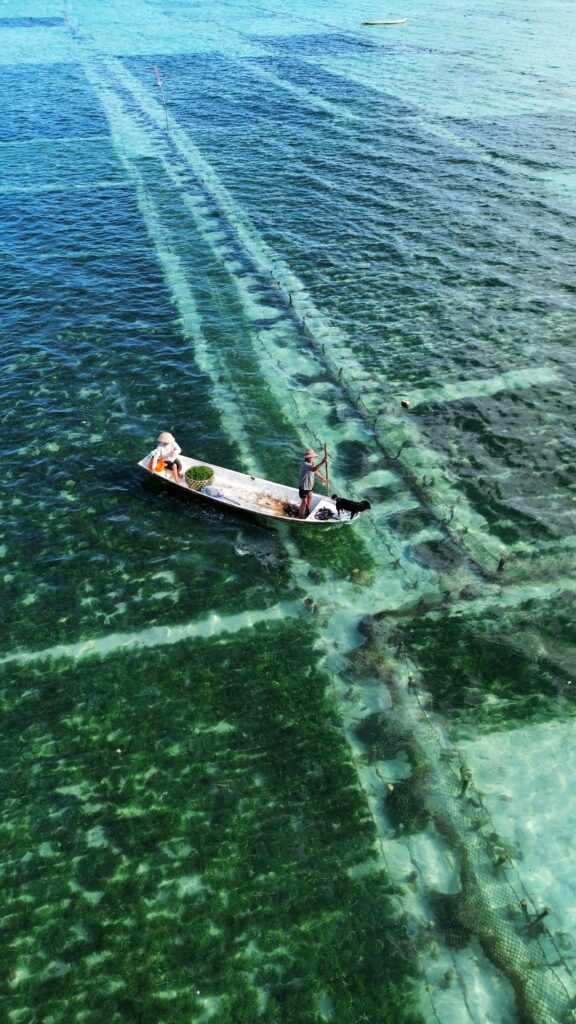
Home to 3,300 people in the Philippines (Central Visayas), families are trying to rebuild their livelihoods. 10-years ago Ice-Ice disease collapsed their aquaculture industry (seaweed farming). Now they rely on external supplies. Seaweed farms once put food on their table, and yours.
seaweed farming
Seaweed is used in everything from shampoo to organic Vegan foods and icecream. You have very likely already eaten some recently. It is even used in beer! 85% is used as food in anything from a gelatin replacement for vegan foods, seaweed wraps and even pet food. Healthy, sustainably sourced food. But this Superstar has other benefits to people and the planet.
It can captures atmospheric carbon, Hingotanans banks alone were capturing around 2500 tonnes of Co2 a year which helps fight climate change. As seaweed takes its nutrients from the seawater it also helps reduce nutrient loading in the surrounding sea.
our approach
For over 2-years we have brought students to the area to learn about ocean health. Last year the community asked us for help, and since then we have been devising a way to do this. We have communicated with government officials, Universities and used our own first hand experiences to develop a path forward. We have designed a process of assessment, training, monitoring and restoration to rebuild the seaweed farms in the local area. We will use local materials and sustainable process, that will enable lasting development. Testing though a mobile platform (boat) provides the most effective and efficient impact. Being a mobile observation platform, classroom and housing for the initiative.
Full details
Background and Introduction
On the remote, crowded island of Hingotanan in the Philippines (Central Visayas), families are struggling to rebuild their livelihoods. It is not just one island, neighboring islands and others across Asia are seeing rising sea temperatures, ocean acidification and increased sediment from on land farming making it harder to farm seaweed. Not impossible, just harder if they lack the science to know how to adapt.
Just over a decade ago, the farms collapsed from Ice-Ice disease. It was a widespread disease across the country, likely caused by rising sea temperatures from climate change. While seaweed farming has recovered elsewhere in the region, Hingotanan and neighbors farms haven’t recovered. Compounded by climate change, rising seas flooding their homes, severe typhoons, and earthquakes that lowered their islands, families have few options beyond fishing in over fished waters—with some relying on government ration packs just to get by.
The islanders have their whole lives on these islands. They do not want to leave them. To go ashore onto the mainland means they no longer own their home and can’t make a living with the skills they have.
They are sea people. The income from seaweed farming will help them build defenses against sea level rise and typhoons, allowing them to survive and thrive into the future and keep their way of life.
The Role of Seaweed
Seaweed does not need land cleared to grow, which helps stop deforestation and biodiversity loss. It does not need fertilizer or pesticides to thrive either.
Excess nutrients from land based farming fertilizer runoff is causing harmful algal blooms and eutrification (lack of oxygen) . The seaweed uses these nutrients making the sea cleaner. Seaweed farming also acts as a nursery for fish, offering protection from predators which helps rejuvenate local fish stocks. In it’s spare time it is also being used as an organic fertilizer for increasing rice yields.
Seaweed farming is a whole family operation. Normally the men do the boat work of stringing out the seedlings on the banks and harvesting (usually with hired local labor) and the women and elderly do the drying, cleaning and preparing it for sale.
Science Meets Community
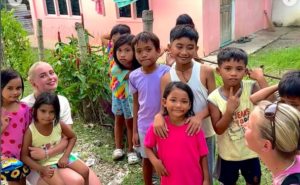
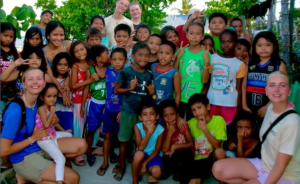
For two months a year we take university students from the Norwegian University of Life Sciences (NMBU) out on a small Wicked Horizon sailboat to teach them about ocean health. We show them real world examples of marine protected zones and ruined reefs from dynamite fishing along with plastic pollution. One of the most impact full memories for them is meeting the people on remote islands and connecting with the local kids. They all watch the same brain-rot on social media, they know the same K-pop and various other things I do not fully understand but they make real connections and lasting friendships.
Last year, the community asked us for help. Of course we would help, but seaweed farming is a very specific field of science, so we need some help. We emailed everyone we could think of, governments, embassies, the UN. The Philippines government is helping some farmers, but with thousands of islands and limited resources they will understandably choose to help the easiest ones to get to. We reached out to our science networks to track down the world’s leading experts who were all eager to help even though the logistics are daunting. Through them we found the Philippines leading expert on seaweed farming, Prof Micheal Roleda. The Principal Investigator, Algal Ecophysiology (AlgaE) Laboratory, and professor of the Marine Science Institute, University of the Philippines.
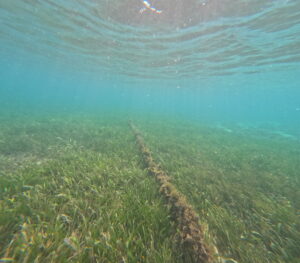
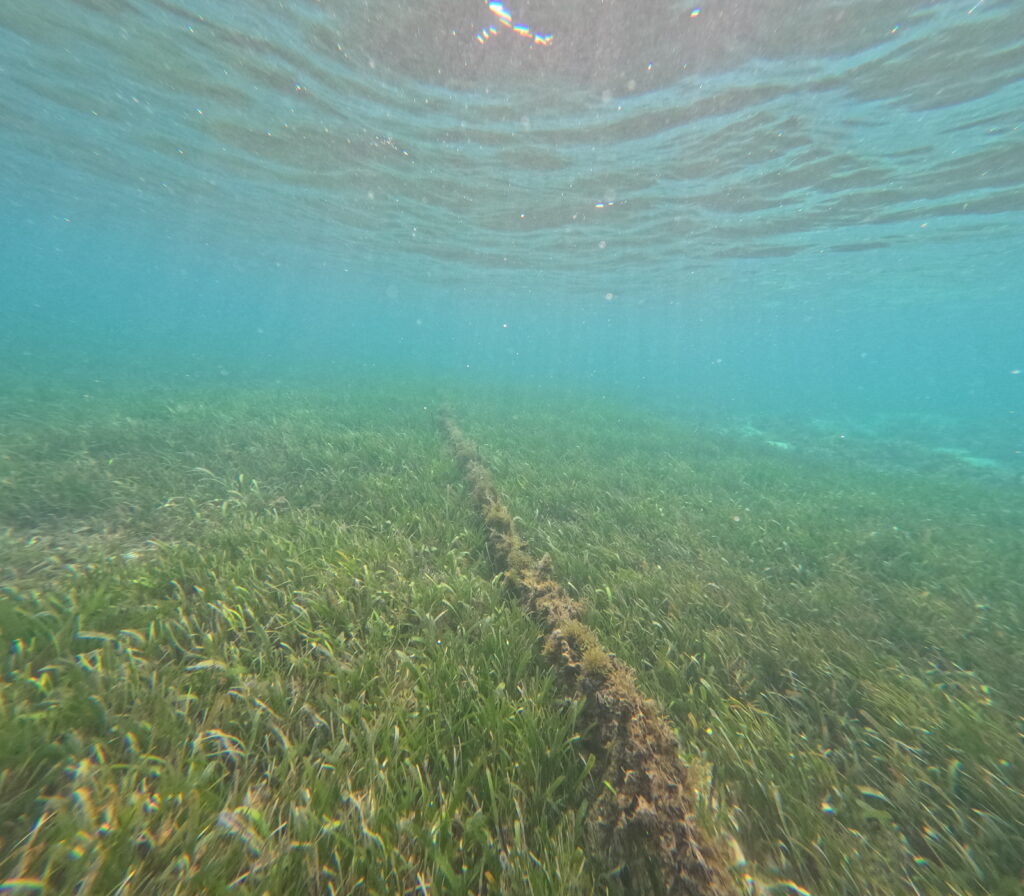
Our progress so far, we visited the island as often as we could, but had limited time and lacked the equipment to do any testing. We and our students volunteered to take video and photos of the seaweed banks to send to prof Roleda. We were hoping that it would be a simple fix but the reasons for the farms not working is not obvious.
The videos showed a surviving ecosystem but a very unhealthy seaweed.
To paraphrase Mark Watney, “we’re gonna need to science the heck out of this”.
Next steps, clearly we need to get the experts and their equipment out to the farms to find the problem. That is not easy, these islands are remote, hard to get to and lack the infrastructure to host scientists. Luckily, with decades of remote area work, our team are very experienced at remote area science and logistics.
A Floating Platform
Research at sea is difficult but vital to our understanding of our rapidly changing planet. Large research vessels can cost up to a billion dollars to build and millions more to operate and still cannot access shallow waters. They also can’t spend the months required on station for just one project. The few Philippines research boats are booked up well into the future and the islanders cannot wait. Leasing a boat would at least cost three times as much every year and we could not create an on board lab. Buying one is a far more sensible investment that will continue to do the work for many years to come and help many more islands like Hingotanan.
For a crazy low cost, we can give a sail boat a new life as a multipurpose mobile floating lab, classroom and begin fieldwork— at a tiny fraction of the cost of a diesel powered research ship. This allows for biodiversity studies, plastic pollution research and helping remote island communities regain their livelihoods. It’s incredibly cost efficient and sustainable as it’s wind driven and solar powered.
Hingotanan is surrounded by shallow reef waters, strong tidal currents and a sea that can become dangerous during monsoon weather and storms. We need a strong, stable blue-water boat that can operate safely in these conditions. After starting sampling and measuring in Hingotanan and while those samples are being analyzed we will move the scientists to the next island etc. Then back to the start to test the outcomes.
You are not just buying a boat, you are changing lives and helping to save the planet with a carbon negative crop that makes organic sustainable foods.
Who We Are
We are Dr. Steve Allen and Dr. Liam Kelleher, founders of Healthy Earth, a UK NGO. Award winning airborne microplastics scientists, polar researchers, teachers, and experienced captains who know these waters well. Steve was awarded ‘Wired magazines 25 for 2020 People trying to make the world better’, he is also a boat builder with an environment and sustainability education masters degree. To oversee the operations success we have William Langslet, a former United Nations results based management advisor.
Cost Breakdown
We have the boat repair and engineering skills in our team to optimise the vessel once purchased, to create maximum impact at the lowest cost. We will have scientists and students on board in remote areas and aim to provide a capable and safe environment. There is no room for half measures.
OUR FUNDRAISING GOALS
GOAL 1 — Get the Boat Ready for Sea
£185,000
Cumulative target: £185,000
Surveys, Safety Inspections & Travel — £15,000
Boat Purchase & Refit — £170,000
Get the right ocean-going sailing vessel, inspect it professionally and prepare it to become our mobile ocean lab & classroom.
GOAL 2 — Crew & Marine Operations
£264,300
Cumulative target: £449,300
Crew Wages & Related Costs — £179,300
Vessel Operations, Fieldwork, Maintenance, Insurance & Provisions — £85,000
Fund experienced professionals and the essential costs of operating and maintaining the vessel safely throughout the first year, including practical fieldwork and activities at sea.
GOAL 3 — Seaweed Farms, Youth & Community
£183,700
Cumulative target: £633,000
Farmer Starter Kits, Youth Activities & Community Work — £70,000
Project Management, Admin, Legal & Compliance — £50,000
Contingency & Unexpected Repairs (Typhoon damage etc) — £63,700
Total First-Year Funding Target: £633,000
Support seaweed farmers, give local young people hands-on ocean education, and work alongside the community. Project management, legal compliance and contingency funding help ensure the project can be delivered responsibly and respond to unexpected costs.
Why is seaweed farming worth reviving?
Seaweed farming can provide income without putting the same pressure on wild fish stocks as some other livelihoods. It once supported families in Hingotanan and helped their children continue their education. Seaweed is a carbon capturing organic, vegan super food and when it is farmed it reduces pressure on local fisheries and the farmers protect the reefs.
We want to understand why the farms collapsed, how they can be sustainably restored, and what other communities can learn from the process.
Who is leading the science and research?
The research is being led by Healthy Earth co-founders Dr Steve Allen and Dr Liam Kelleher, working with university researchers and local partners.
For the seaweed restoration work, we’re working with Dr Michael Roleda and his team at the University of the Philippines, one of the leading seaweed research groups in the Philippines and globaly.
Are you working with local authorities and scientists?
Yes. We work with locals, community leaders, grassroots organisations, universities and government partners.
For Hingotanan, we’re also working with Dr Michael Roleda and his team on seaweed research and restoration.
Who gets to go on the boat?
The boat will accommodate up to 12 people, including a small core crew, researchers, students, local community members and other project participants. We welcome scientists from any field that wants to do research as long as it does not interfere with our primary goal to help the seaweed farmers.
Is this a luxury sailing trip?
Absolutely not. 😊
This is a working research vessel. Life aboard will be simple, cramped and sometimes uncomfortable, with limited space, water and plenty of time working in heat, rain and rough conditions.
Every part of the boat will have a purpose: carrying people and equipment, collecting samples, running tests and providing basic accommodation.
Can I come along or visit the boat?
Yes we welcome you—but space will be very limited because this is a working research vessel. With a contribution towards costs.
Opportunities are available for researchers, students, supporters and others, subject to safety, weather and operational requirements.
Will people around the world benefit from this project?
Of course. The challenges we’re investigating—declining fisheries, plastic pollution, damaged marine ecosystems and climate change—affect coastal communities around the world. This project affects global food security as we search for sustainable sources for all of us.
Our aim is to share the research, lessons and methods as widely as possible.
Why do you need donations if you plan to apply for grants?
Donations will help us get started without waiting for grant funding, which can take time to secure. Time the islanders don’t have.
Once the project is underway, we’ll pursue research grants and other funding to help sustain the boat and our programmes.
How will you make sure donations are used responsibly?
Healthy Earth is committed to using donations carefully and transparently. We have enlisted William Langslet whose position at the UN was ensuring donors got the most bang for their buck. He is overseeing the project from day one.
We’ll provide updates on how funds are being spent, what we’ve achieved and what comes next. Major purchases will be guided by practical needs, safety and long-term sustainability.
Is my donation tax deductible?
Unfortunately no. We are still trying to get full charity status through the charity commission which takes time. So although we are operated like a normal charity with all the normal safeguards in place, we are not yet.
What do you do if you exceed the funding target?
That would be amazing. 😊
If we raise more than we need for the boat itself, the extra funding will help us take the project further and reach more communities. extra funding just helps us do more and spend less time writing grants. Not a penny is wasted.
FAq
Healthy Earth and Partners
We are environmental scientists, working on pollution monitoring and solving real world problems. Our partners are local participants, governments and experts.
Together we have formed an inactive and impactful plan to restore the livelihoods, industry and future of locals in Hingotanan.
Our approach forms a platform that will build and continue to help communities world wide whilst providing the most effective costs and lowest carbon footprint
initiative
Together we will develop, restore and monitor seaweed farming on the island of Hingotanan. Using a mobile floating platform we will build new seaweed sanctuaries and train participants in sustainable practices.
We need your support to make this happen
Donate, share and promote the project to help us
Latest News
Over the passed 2-years we have build relationships with the Hingotanan community, developed local government and University partnerships, and carried out preliminary assessments of the previous seaweed farming sites.